
Body & symptoms · 6 min read · October 21, 2026
Perimenopause Symptoms List: 34 Signs, From the Common to the Unexpected
The complete perimenopause symptoms list: 34 signs grouped by body system, from irregular periods and night sweats to itchy skin and brain fog, plus when to call your doctor sooner.
Some images in this story were created or assisted by AI tools.
Perimenopause rarely arrives as one clear symptom. It tends to show up as a scattered handful of changes that are easy to blame on stress, age or a bad month: a shorter cycle here, a 3 a.m. wake-up there, a word you can't quite find in the middle of a sentence.
Seeing the whole list in one place helps. It turns "I feel off and I don't know why" into something you can track, describe and take to your doctor. Below is a complete perimenopause symptoms list, grouped by where you'll notice it, from the familiar signs to the ones that surprise most women.
First, what perimenopause actually is
Perimenopause is the transition before menopause. It usually begins in your 40s, sometimes in your late 30s, and lasts on average around four years, though for some women it is closer to ten. Menopause itself is one day: the point when you have gone 12 months in a row without a period. In the US, that happens at around age 51 on average.
During perimenopause, estrogen and progesterone don't simply fall in a straight line. They rise and dip unpredictably, which is why symptoms can come and go, change from month to month, or vanish for a while and return.
You may have seen a "34 symptoms of menopause" list online. It isn't an official medical list, but it is a useful way to see how wide the range is. Here is our version, written in plain language.
The perimenopause symptoms list: 34 signs
Your cycle
- 1. Irregular periods. Cycles that get shorter, then longer, or periods that skip a month. Often the first sign.
- 2. Heavier (or lighter) periods. Some women suddenly bleed much more, with clots, or for more days than before.
- 3. Spotting between periods. Common in the transition, but always worth mentioning to your doctor.
- 4. Worse PMS. Mood dips, bloating and cravings that feel stronger or last longer than they used to.
- 5. Breast tenderness. Often linked to higher, swinging estrogen levels early in perimenopause.
Body temperature
- 6. Hot flashes. A sudden wave of heat through the chest, neck and face, sometimes with flushing and a racing heart.
- 7. Night sweats. Hot flashes that happen while you sleep, often enough to soak pajamas or sheets.
- 8. Chills. Feeling cold and shivery right after a flush passes.
Sleep and energy
- 9. Insomnia and 3 a.m. wake-ups. Trouble falling asleep, or waking in the early hours and not getting back to sleep.
- 10. Fatigue. A tiredness that sleep doesn't fully fix, partly because sleep itself is more broken.
Mood
- 11. Irritability. A shorter fuse than usual, often out of character.
- 12. New or worse anxiety. Including a sense of dread or a racing mind that seems to come from nowhere.
- 13. Low mood. Feeling flat, tearful or less like yourself.
- 14. Mood swings. Feeling fine in the morning and overwhelmed by afternoon.
- 15. Lower confidence. Many women describe second-guessing themselves at work or socially.
Brain and focus
- 16. Brain fog. Feeling slower, foggier or less sharp than usual.
- 17. Memory lapses. Losing words mid-sentence, forgetting names or why you walked into a room.
- 18. Trouble concentrating. Reading the same paragraph three times.
Joints, muscles and weight
- 19. Joint aches and stiffness. Especially in the hands, knees, hips and shoulders, often worse in the morning.
- 20. Muscle aches and tension. Including neck and shoulder tightness.
- 21. Weight gain around the middle. Fat tends to shift toward the belly, even if your weight hasn't changed much. (More on that in our guide to menopause belly.)
- 22. Bloating and digestive changes. More gas, bloating or changes in bowel habits.
Head and heart
- 23. Headaches or migraines that change pattern. Some women get more headaches around shifting hormone levels; others notice migraines change.
- 24. Heart palpitations. A fluttering, pounding or racing heartbeat, often during a hot flash or at night.
- 25. Dizziness. Brief light-headed spells.
- 26. Tingling or "electric shock" sensations. Some women describe a zap under the skin, often just before a hot flash.
Skin, hair, eyes and mouth
- 27. Dry, itchy skin. Sometimes with a crawling sensation, as falling estrogen affects skin's moisture and collagen.
- 28. Thinning hair. More shedding, a wider part, or new hairs on the chin.
- 29. Brittle nails. Nails that split or peel more easily.
- 30. Dry eyes. Gritty, tired eyes, especially with screens.
- 31. Dry or burning mouth. Including gum sensitivity or a changed sense of taste.
Intimate and urinary health
- 32. Vaginal dryness. Itching, discomfort or pain during sex.
- 33. Lower sex drive. Often tangled up with tiredness, mood and discomfort.
- 34. Bladder changes. Needing to pee more often, small leaks when you sneeze or laugh, or more urinary tract infections.
Why the symptoms feel so unpredictable
Because hormone levels swing rather than steadily drop, perimenopause symptoms often cluster, fade and come back. You might have three months of night sweats, then nothing, then a stretch of anxiety and broken sleep. That is normal for this stage, and it is exactly why writing things down helps. Patterns you can't see day to day become obvious over two or three cycles.
If you're just starting to notice changes, our list of early perimenopause signs covers the quieter first symptoms in more detail.
Perimenopause, or something else?
Many of these symptoms overlap with other common conditions, so it is worth ruling them out rather than assuming:
- Thyroid problems can cause fatigue, weight change, mood changes, hair thinning and feeling too hot or too cold.
- Iron deficiency, often from heavy periods, can cause exhaustion, breathlessness and brain fog.
- Depression and anxiety deserve care in their own right, whatever the cause.
- Pregnancy is still possible in perimenopause. Keep using contraception until your doctor confirms you no longer need it.
A simple blood test can check thyroid function and iron levels. For women over 45 with typical symptoms, doctors usually diagnose perimenopause from your symptoms and cycle history rather than hormone tests, because levels fluctuate so much from day to day.
When to call your doctor sooner
Book an appointment promptly, rather than waiting it out, if you notice:
- Very heavy bleeding, such as soaking through a pad or tampon every hour or two
- Periods that last longer than seven days
- Periods that regularly come less than 21 days apart
- Bleeding between periods or after sex
- Any bleeding after you have gone 12 months without a period
- Chest pain, fainting or palpitations that don't settle
- Low mood that is affecting your daily life, or thoughts of harming yourself
How to use this list
Pick the symptoms that sound familiar and track them for two or three cycles: what happened, how strong it felt, and where you were in your cycle. Bring that record to your appointment. It makes the conversation faster and much more useful. Our perimenopause symptom tracker guide walks you through exactly what to note, and you can download the free tracker at the top of this page.
And remember that you don't have to just push through. Hormone therapy, non-hormonal prescriptions, vaginal estrogen and practical changes to sleep, food and movement can all make a real difference. For two of the most common symptoms, start with our guides to hot flashes relief and a calmer menopause sleep routine.
This article is for general information and is not medical advice. If you are worried about any symptom, please talk to your doctor or a menopause-informed clinician.
Pin this
Perimenopause Symptoms List: 34 Signs, From the Common to the Unexpected | The Menopause Edit
The complete perimenopause symptoms list: 34 signs grouped by body system, from irregular periods and night sweats to itchy skin, brain fog and joint aches. Includes when to call your doctor and a free symptom tracker. Save it for your next appointment.
34 symptoms of menopause menopause symptoms perimenopausal symptoms signs list perimenopause symptoms perimenopause symptoms list signs of perimenopause
← Menopause Belly: Why It Happens and 10 Habits That Actually Help · 50 Funny Menopause Quotes That Are Way Too Real →
Related

Female Hormone Imbalance After 40: 12 Signs, Common Causes and What Actually Helps
What hormone imbalance usually means after 40, the 12 most common signs, how to tell perimenopause from thyroid and other causes, which tests are worth it, and what actually helps.
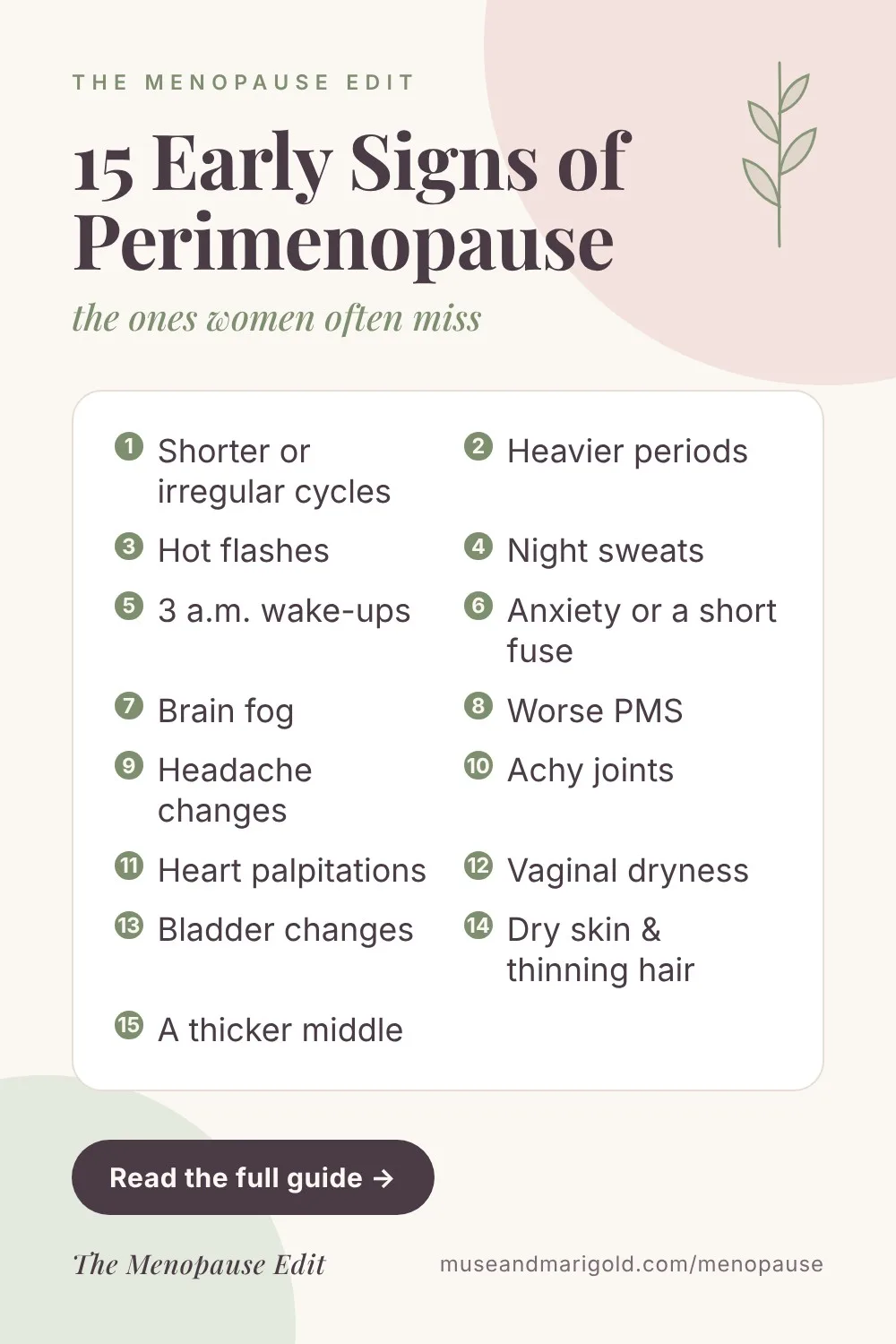
Early Perimenopause Signs: 15 Symptoms Women Often Miss
Perimenopause rarely announces itself. Here are 15 early signs, including the quieter ones that rarely make the lists, how to tell it apart from other causes, and when to call your doctor sooner.
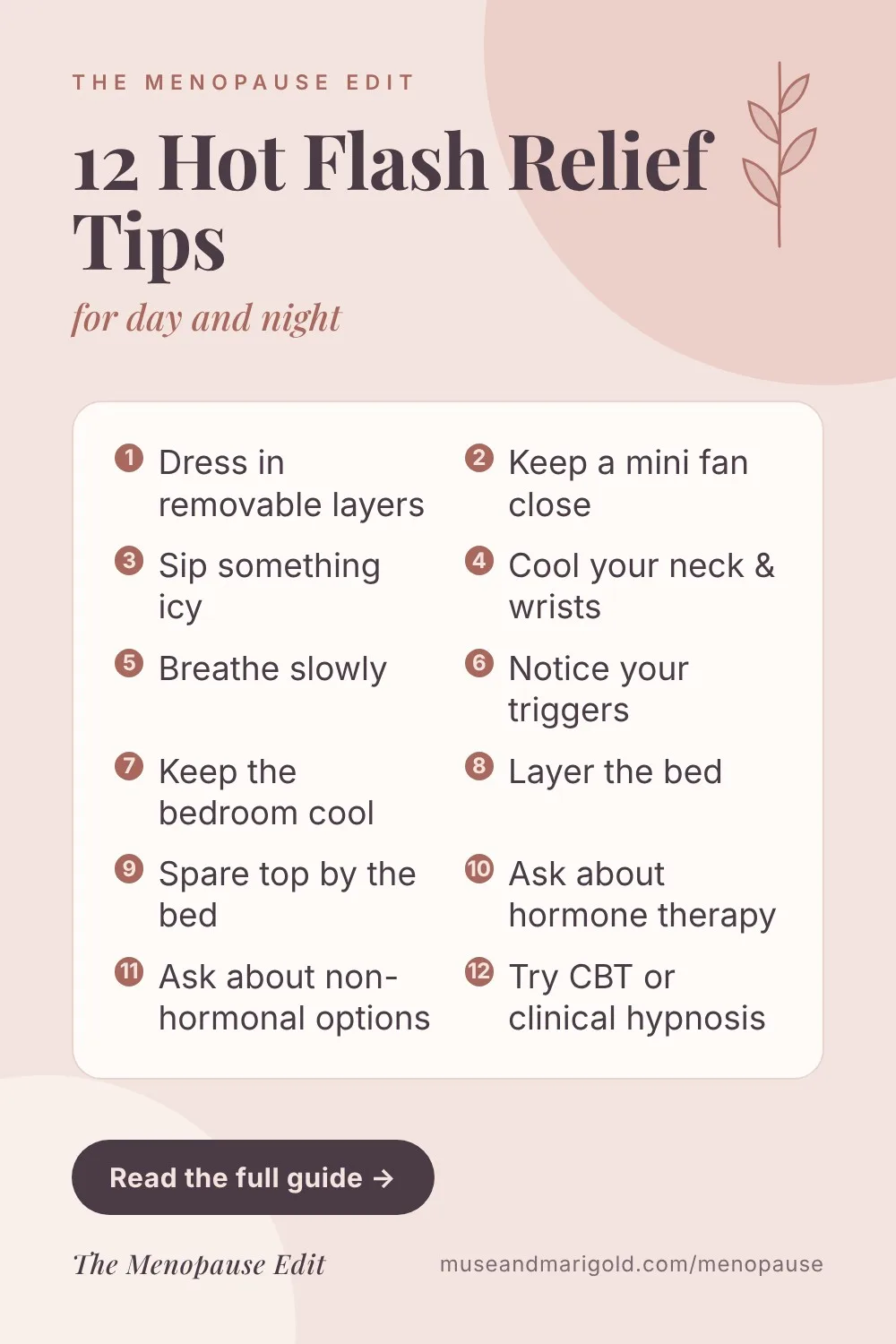
Hot Flashes Relief: 12 Cooling Tips and Treatments That Help
Comfort tricks help you get through a hot flash. Proven treatments help you have fewer of them. Here is an honest guide to both, plus how to talk to your doctor.