
Body & symptoms · 4 min read · October 20, 2026
Hot Flashes Relief: 12 Cooling Tips and Treatments That Help
Comfort tricks help you get through a hot flash. Proven treatments help you have fewer of them. Here is an honest guide to both, plus how to talk to your doctor.
A hot flash can turn a meeting, a dinner or a good night's sleep upside down in under a minute. Up to three in four women have them during the menopause transition, and for many they last for years, not months. If you are in the middle of them, you want two things: ways to feel more comfortable right now, and a clear picture of which treatments actually reduce how often they happen.
This guide covers both, honestly. Some popular tips make hot flashes easier to ride out without making them less frequent, and it helps to know the difference.
What is happening during a hot flash
The brain has a temperature control center that keeps your body within a narrow comfort zone. As estrogen levels change, that zone narrows, so a tiny rise in core temperature can set off the body's cooling response: blood vessels near the skin widen, you flush, your heart speeds up and you sweat. Then, as the heat leaves, you may feel chilled. When this happens at night it is called a night sweat.
Comfort tips for the moment it hits
Research hasn't shown that these comfort measures reduce how many hot flashes you have, but they are low risk and many women find them make each episode easier to get through.
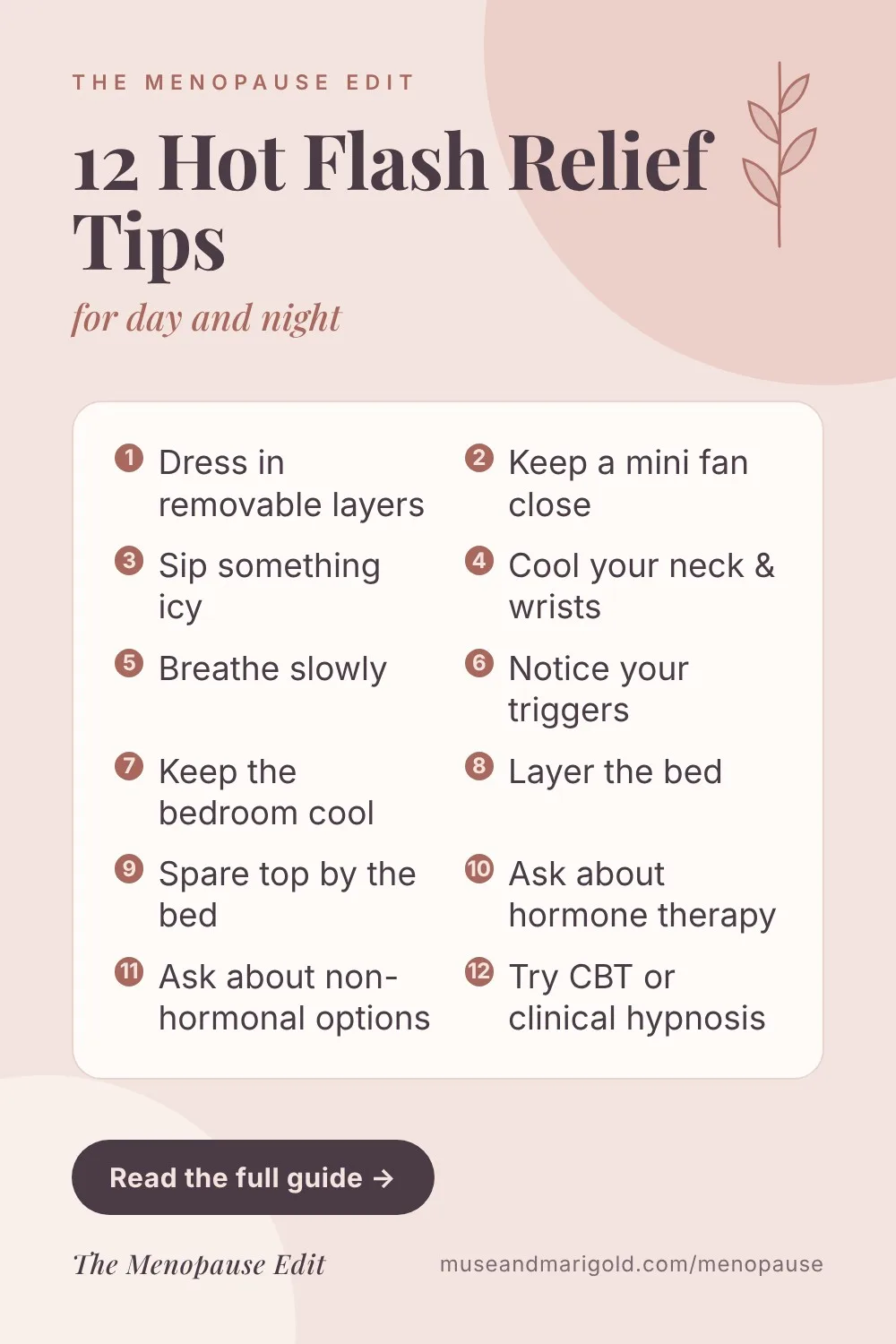
1. Dress in layers you can remove fast
A tank or short sleeve top under an open cardigan or shirt jacket lets you cool down in seconds. Breathable fabrics like cotton, linen, silk and fine merino wool are kinder than tight synthetics.
2. Keep a small fan within reach
A handheld or desk fan on your neck and face is one of the fastest ways to feel cooler.
3. Sip something cold
Carry a water bottle with ice. A cold drink at the first sign of heat can take the edge off.
4. Cool your pulse points
A cool cloth or cooling towel on the back of your neck or wrists feels good mid-flash.
5. Breathe slowly
Slow breathing won't stop a hot flash, but it can calm the racing heart and panic that sometimes come with one.
6. Notice your personal triggers
Hot drinks, spicy food, alcohol, warm rooms and stress are common triggers for some women. Avoiding triggers hasn't been proven to reduce hot flashes overall, but if you notice a clear pattern, adjusting it may make a particular situation easier.
Comfort tips for night sweats
7. Keep the bedroom cool
A cooler room, often somewhere in the 60s Fahrenheit, makes it easier to get back to sleep after a night sweat.
8. Layer the bed, too
Use a sheet plus a light blanket instead of one heavy duvet, so you can adjust without fully waking. Breathable cotton or linen sheets help.
9. Keep a change of sleepwear by the bed
Swapping a damp top in the dark is faster than lying awake in it.
Options with real evidence behind them
If hot flashes are disrupting your sleep, work or mood, these are the approaches medical societies such as The Menopause Society say have good evidence for reducing them.
10. Hormone therapy
Estrogen-based therapy is the most effective treatment for hot flashes and night sweats. For many healthy women under 60 or within 10 years of menopause, the benefits often outweigh the risks, but the right choice depends on your personal and family history. It's a conversation worth having with a clinician who knows menopause care.
11. Non-hormonal prescriptions
For women who can't or don't want to use hormones, there are several options, including certain antidepressants at low doses, gabapentin, oxybutynin and a newer class of medicines that act directly on the brain's temperature control center. Each has its own side effects, so the choice is personal.
12. Cognitive behavioral therapy and clinical hypnosis
These are drug-free approaches with solid research behind them. Cognitive behavioral therapy for menopause can make hot flashes less bothersome and improve sleep, and clinical hypnosis has been shown to reduce how often they happen. Both are available in person and, increasingly, online.
Weight loss can also reduce hot flashes for women carrying extra weight. On the other hand, supplements and herbal remedies, soy products, and acupuncture have not shown consistent benefit in research, so be cautious about products that promise to stop hot flashes.
How to talk to your doctor about hot flashes
Before your appointment, keep a simple log for two to four weeks: how many hot flashes a day, how strong they feel on a scale of 1 to 10, how many times they wake you at night, and anything that seems to set them off. Bring a list of your medicines and any family history of breast cancer, blood clots, heart disease or stroke. That makes it much easier to weigh options together.
Also mention it if your hot flashes come with fever, weight loss you can't explain or new palpitations, because other conditions can cause flushing too.
The bottom line
Cooling tricks help you get through the moment. Proven treatments help you have fewer moments to get through. You deserve both, and you don't have to simply wait it out.
This article is for general information and is not medical advice. Please talk with your doctor or a menopause-trained clinician about your own symptoms and options.

Pin this
Hot Flashes Relief: 12 Cooling Tips and Treatments That Help | The Menopause Edit
Hot flashes and night sweats wearing you down? Here are quick cooling tips for the moment one hits, bedroom tips for night sweats, and the menopause treatments with real evidence behind them, from hormone therapy to CBT and non-hormonal options to discuss with your doctor.
hot flash relief hot flashes menopause hot flashes menopause treatment night sweats perimenopause hot flashes
← Early Perimenopause Signs: 15 Symptoms Women Often Miss · Menopause Grocery List: 30 Foods to Keep in Your Kitchen After 40 →
Related
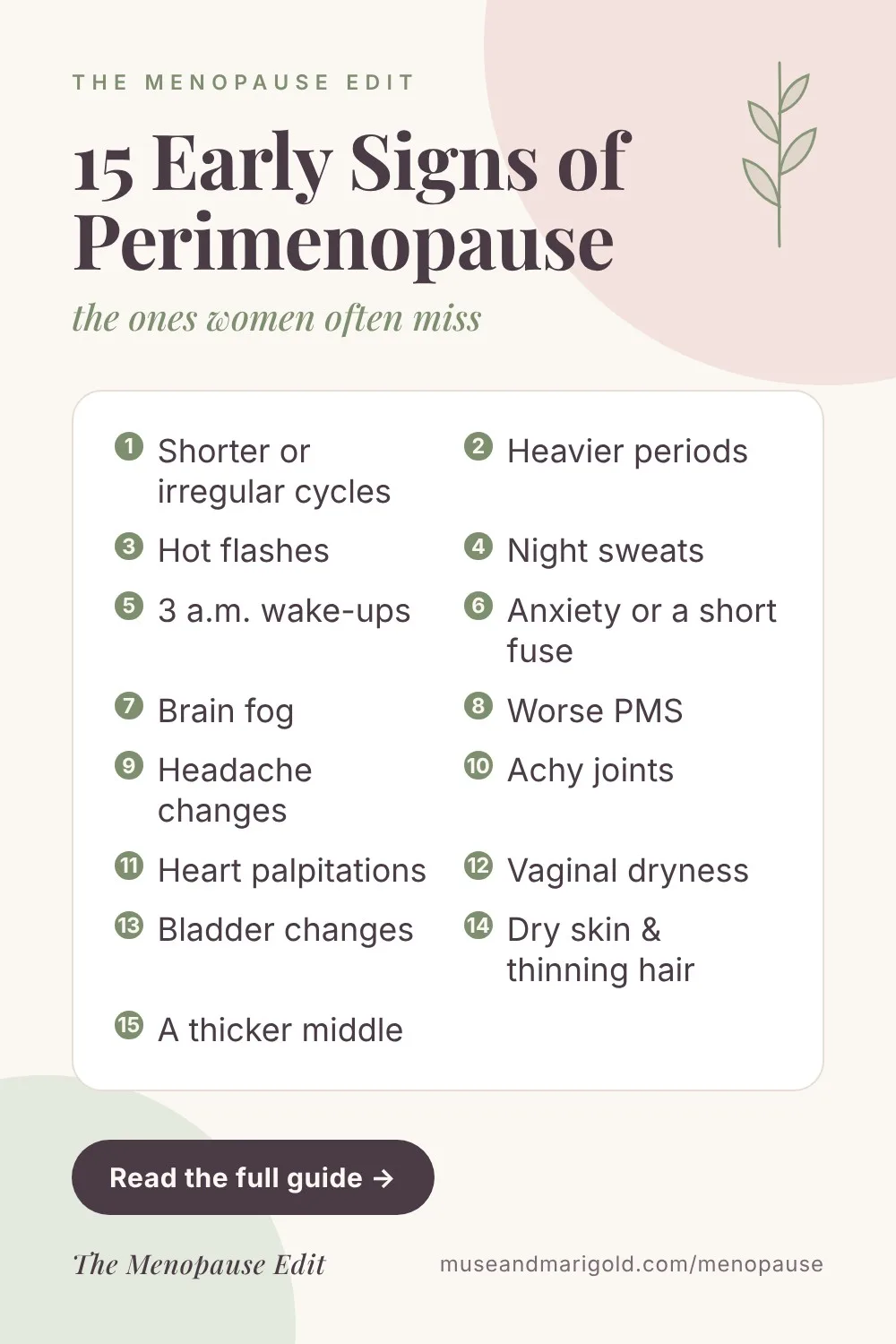
Early Perimenopause Signs: 15 Symptoms Women Often Miss
Perimenopause rarely announces itself. Here are 15 early signs, including the quieter ones that rarely make the lists, how to tell it apart from other causes, and when to call your doctor sooner.
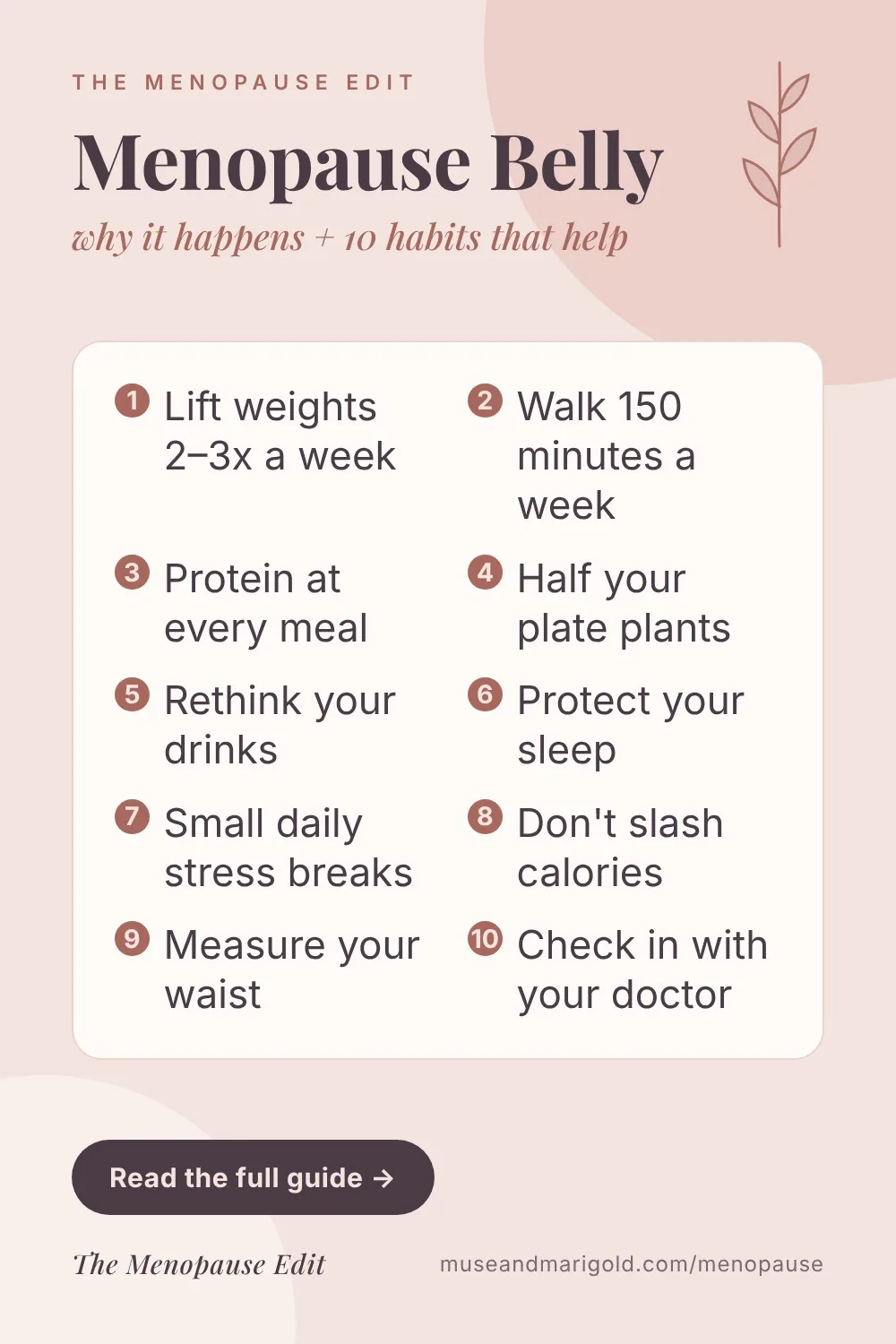
Menopause Belly: Why It Happens and 10 Habits That Actually Help
Your weight barely moves but your middle has changed. Here is why the menopause belly happens and ten everyday habits that actually help.