
Body & symptoms · 4 min read · October 20, 2026
Menopause Belly: Why It Happens and 10 Habits That Actually Help
Your weight barely moves but your middle has changed. Here is why the menopause belly happens and ten everyday habits that actually help.
Your weight may barely move on the scale, yet your jeans fit differently and your middle feels softer and rounder. If that's happening in your 40s or 50s, you're not imagining it, and it isn't simply a lack of willpower. Changes in hormones, muscle and sleep all shift where your body stores fat during the menopause transition.
The encouraging part: belly fat responds to the same everyday habits that protect your heart, bones and energy. Here is why the menopause belly happens and ten habits that actually help.
Why the menopause belly happens
- Estrogen shifts fat storage. Before menopause, women tend to store fat on the hips and thighs. As estrogen falls, more fat is stored around the abdomen, including deeper visceral fat around the organs.
- Muscle declines with age. Muscle mass gradually drops from midlife onward unless you work to keep it, and less muscle means your body burns slightly fewer calories at rest.
- Sleep gets worse. Short or broken sleep is linked to increased hunger, cravings and weight gain.
- Life gets busier. Caring for teens and aging parents, demanding jobs and less time to move all add up.
Why it matters beyond your clothes: visceral fat is linked to higher risk of heart disease and type 2 diabetes. For women, a waist measurement above 35 inches is one signal that health risks are rising, according to the National Heart, Lung, and Blood Institute.
10 habits that help
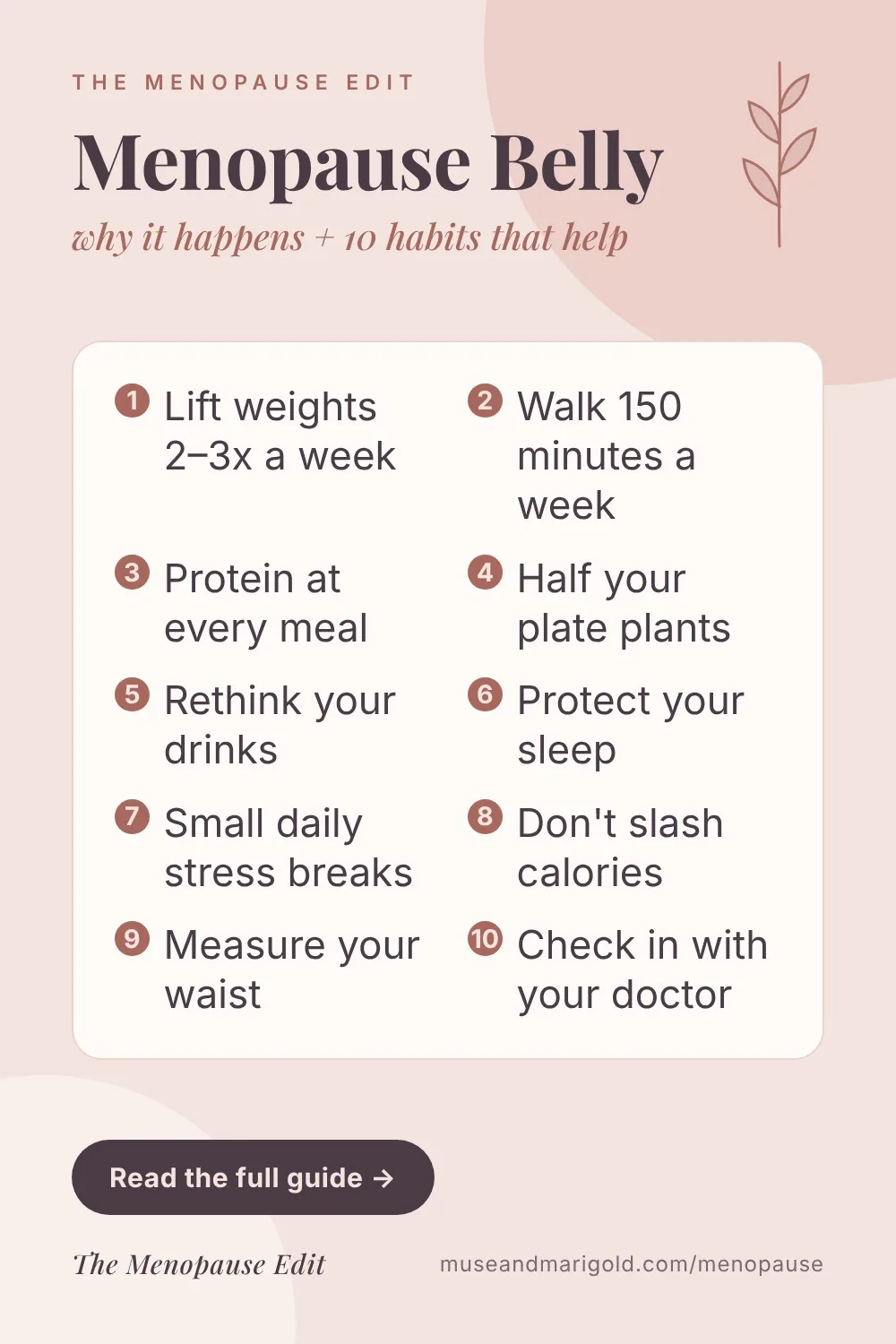
1. Lift weights or do resistance training
If you change one thing, make it this. Strength training two or three times a week helps preserve and build muscle, which supports your metabolism, blood sugar and bones. Start with body weight, resistance bands or light dumbbells and focus on squats, lunges, rows, presses and carries.
2. Keep walking
Aim for at least 150 minutes of moderate activity a week, the amount in the US physical activity guidelines. Brisk walks count. A walk after meals may also help with blood sugar.
3. Put protein at every meal
Protein helps you stay full and protects muscle. Many experts suggest around 25 to 30 grams per meal for women in midlife: eggs or Greek yogurt at breakfast, beans, fish or chicken at lunch and dinner.
4. Fill half your plate with plants
Vegetables, fruit, beans and whole grains add fiber, which keeps you full and supports a healthy gut and steady blood sugar.
5. Rethink your drinks
Alcohol adds calories, disrupts sleep and can trigger hot flashes. Sweetened coffee drinks and sodas add up too. Sparkling water, unsweetened tea and smaller pours make a difference over time.
6. Protect your sleep
A consistent bedtime routine, a cool bedroom and treating night sweats can all improve sleep. Better sleep makes every other habit on this list easier.
7. Manage stress in small doses
Ongoing stress can drive comfort eating and poor sleep. Even ten minutes a day of something that genuinely calms you, a walk, a stretch, a phone call with a friend, counts.
8. Don't slash calories too hard
Severe dieting tends to cost muscle along with fat, which works against you in midlife. A modest, sustainable change in portions plus more protein and strength training is a better long-term trade.
9. Measure your waist, not just your weight
Because muscle and fat shift, the scale can be misleading. A tape measure around your waist once a month, along with how your clothes fit and how strong you feel, tells a fuller story.
10. Talk to your doctor about the bigger picture
Ask about blood pressure, cholesterol, blood sugar and thyroid checks. If weight is affecting your health, your doctor can talk you through medical options too. Hormone therapy is not a weight loss treatment, but treating symptoms like night sweats may make it easier to sleep, move and eat well.
A sample week
- Monday: 30-minute strength session plus a 15-minute walk
- Tuesday: 30-minute brisk walk
- Wednesday: 30-minute strength session
- Thursday: Rest or gentle yoga
- Friday: 30-minute strength session plus a short walk
- Weekend: One longer walk, hike or bike ride you enjoy
Be patient with your body
The menopause belly didn't appear in a month and won't disappear in one. Aim for habits you can keep for years: lifting, walking, protein, plants and sleep. The changes in your energy and strength often show up before the changes on the tape measure, and they are worth just as much.
This article is for general information and is not medical advice. Please check with your doctor before starting a new exercise program, especially if you have a heart condition, joint problems or other health concerns.

Pin this
Menopause Belly: Why It Happens and 10 Habits That Actually Help | The Menopause Edit
Weight shifting to your middle in your 40s and 50s? Learn why the menopause belly happens and 10 realistic habits that help: strength training, walking, protein at every meal, fiber, better sleep and fewer drinks. Includes a sample week.
belly fat after 40 menopause belly menopause fitness menopause weight gain perimenopause weight gain strength training for women over 40
← Perimenopause Symptom Tracker: What to Track and How to Talk to Your Doctor
Related
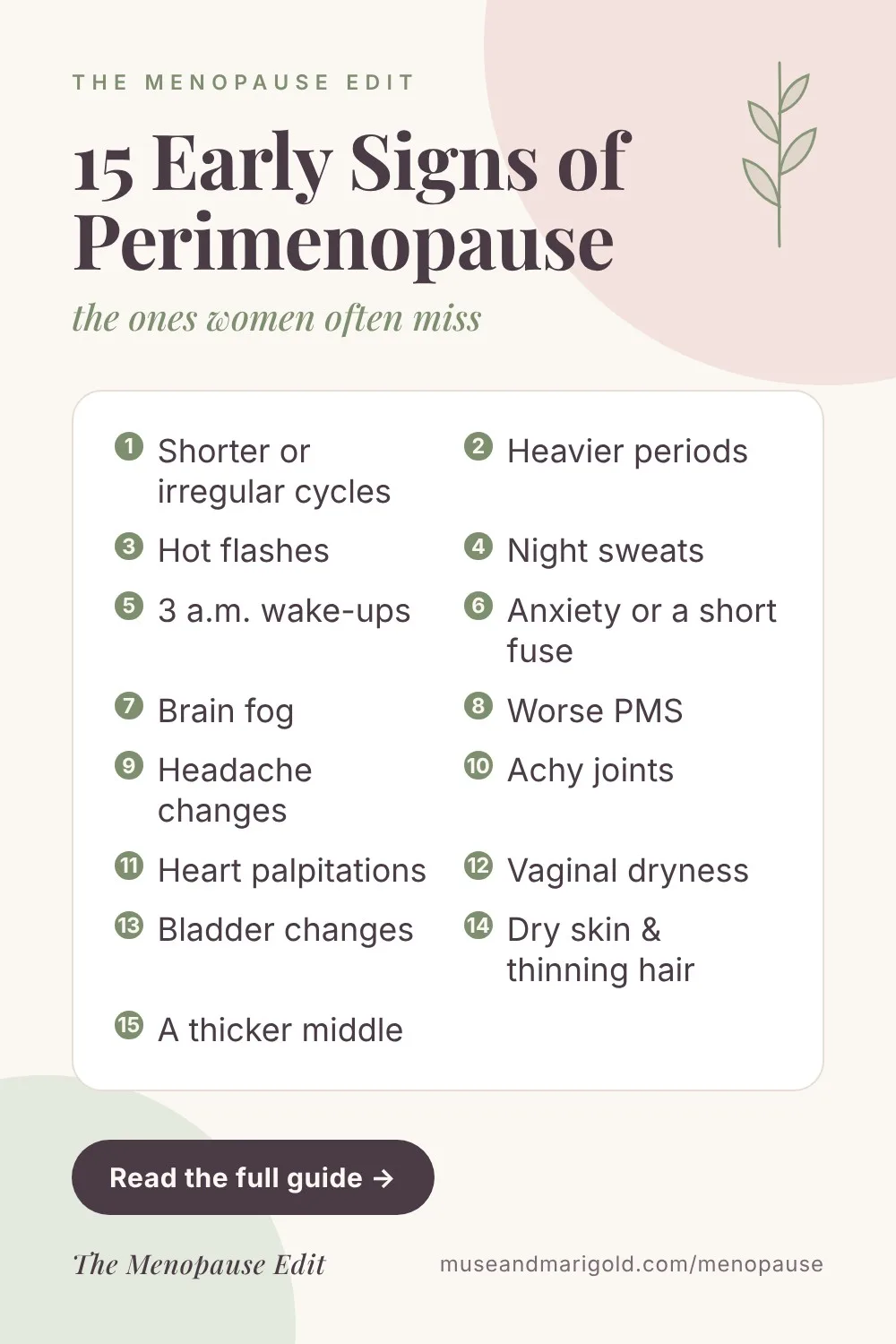
Early Perimenopause Signs: 15 Symptoms Women Often Miss
Perimenopause rarely announces itself. Here are 15 early signs, including the quieter ones that rarely make the lists, how to tell it apart from other causes, and when to call your doctor sooner.
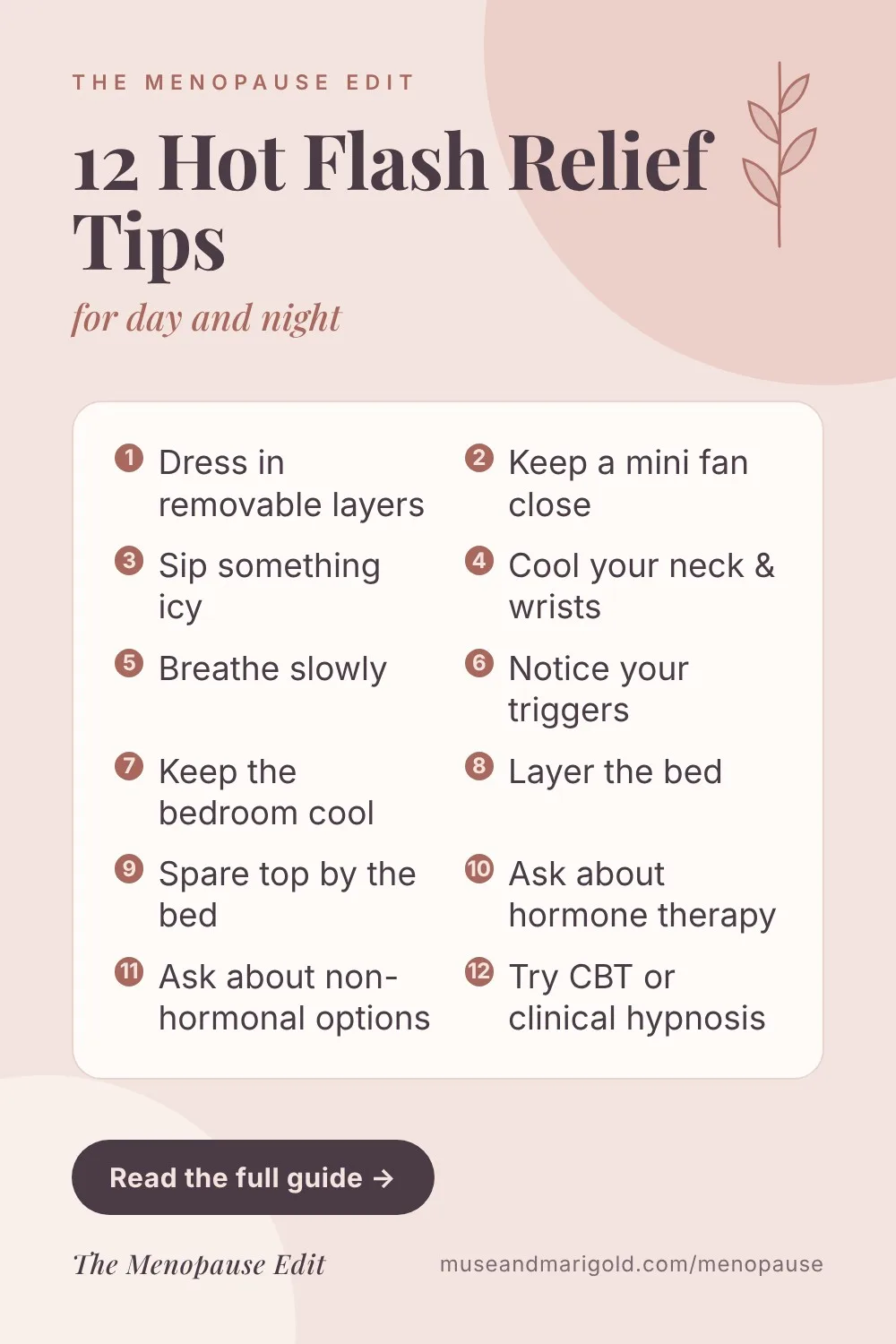
Hot Flashes Relief: 12 Cooling Tips and Treatments That Help
Comfort tricks help you get through a hot flash. Proven treatments help you have fewer of them. Here is an honest guide to both, plus how to talk to your doctor.