
Body & symptoms · 5 min read · October 20, 2026
Early Perimenopause Signs: 15 Symptoms Women Often Miss
Perimenopause rarely announces itself. Here are 15 early signs, including the quieter ones that rarely make the lists, how to tell it apart from other causes, and when to call your doctor sooner.
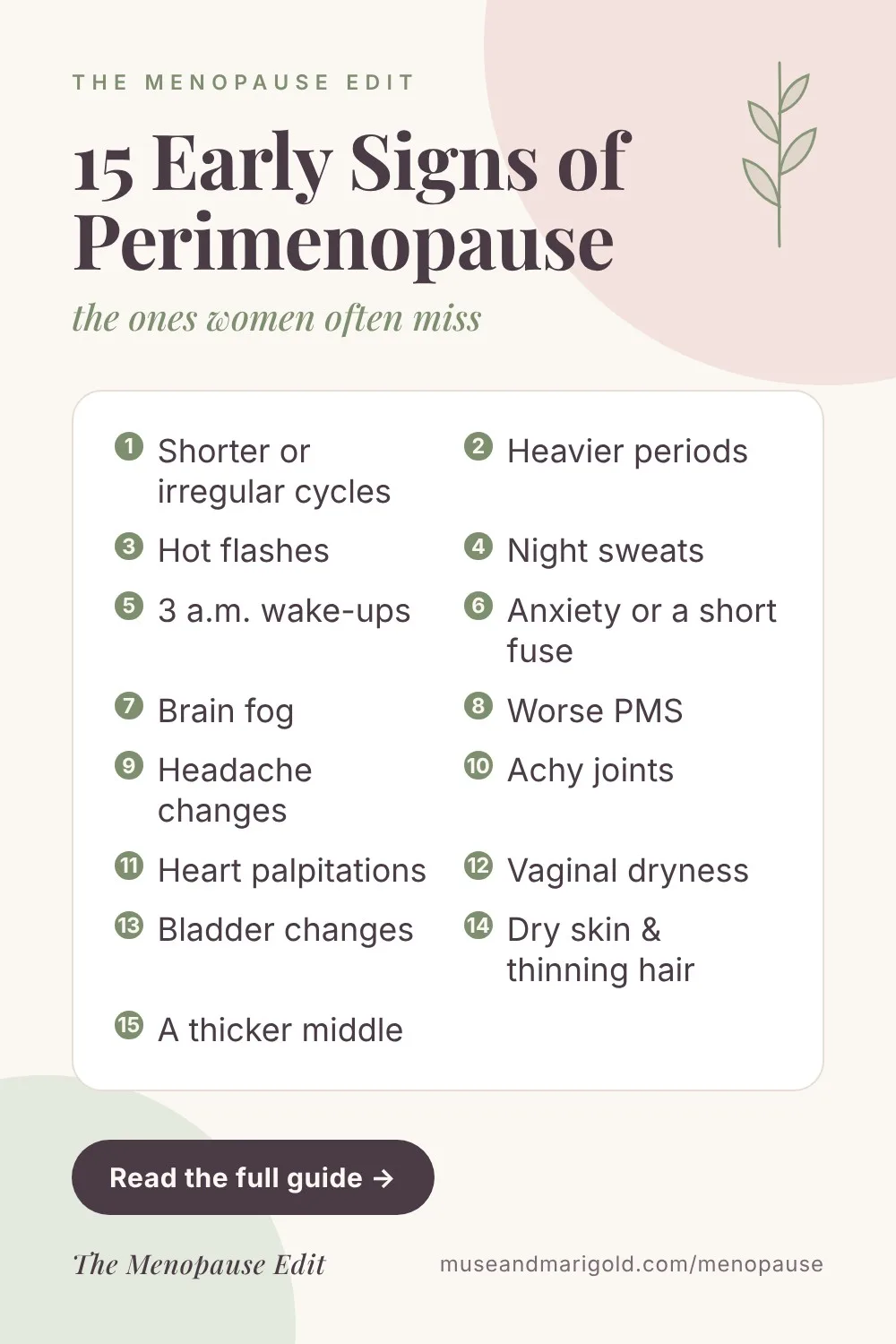
Perimenopause rarely announces itself. For most women it arrives sideways: a period that shows up a week early, a night of soaked sheets, a sudden flash of irritation you can't explain, or a word that simply will not come to you mid-sentence. Because these changes are spread out and easy to blame on stress, many women spend years wondering what is going on before anyone uses the word perimenopause.
This guide walks through the early signs of perimenopause, including the quieter ones that rarely make the lists, so you can recognize the pattern, track it, and have a more useful conversation with your doctor.
What perimenopause actually is
Perimenopause is the transition before menopause, when the ovaries gradually produce estrogen and progesterone less predictably. It most often begins in your 40s, though some women notice changes in their late 30s. It typically lasts several years, and for some women closer to a decade.
Menopause itself is a single point in time: 12 months in a row without a period. In the United States that happens at around age 51 on average. Everything leading up to it is perimenopause, and the reason the symptoms feel so random is that hormone levels don't fall in a smooth line. They swing up and down, sometimes month to month.
15 early signs of perimenopause
1. Changes in your cycle
Often the first clue. Cycles may get shorter (every 21 to 24 days instead of 28), then later become longer or skip months. Periods can be heavier, lighter, longer or shorter than you are used to.
2. Heavier periods
Many women expect periods to taper off, so heavy bleeding comes as a surprise. Swinging estrogen can build a thicker uterine lining, which means heavier flow and sometimes clots. Heavy bleeding is common but it is also worth reporting, because it can lead to low iron and occasionally points to something else.
3. Hot flashes
A sudden wave of heat across the chest, neck and face, sometimes with flushing, a racing heart and sweating, followed by a chill. In early perimenopause they may be mild or only show up around your period.
4. Night sweats
Hot flashes that happen during sleep. You may wake up damp, kick the covers off, then feel cold minutes later.
5. Trouble sleeping
Waking at 3 a.m. and being unable to drift off again is one of the most common complaints, even in women without night sweats.
6. Anxiety or a shorter fuse
Some women notice new anxiety, irritability or low mood, especially in the week before a period. If you have a history of PMS, postpartum depression or depression, you may be more sensitive to these shifts.
7. Brain fog
Losing words, walking into a room and forgetting why, or struggling to focus. It is frustrating and very common, and research suggests it tends to ease after the transition.
8. Worse PMS
Breast tenderness, bloating, headaches and mood swings can intensify, because estrogen can run higher than usual in some cycles.
9. Headaches or migraine changes
Migraines linked to the menstrual cycle may get more frequent for a while, or change pattern.
10. Joint and muscle aches
Stiff fingers in the morning, achy knees or a sore shoulder that came out of nowhere. Estrogen plays a role in joints and connective tissue, so aches often show up in the 40s.
11. Heart palpitations
A fluttering or pounding heartbeat, often during a hot flash. Usually harmless in this context, but always mention it to your doctor so they can rule out other causes.
12. Vaginal dryness and lower libido
Dryness, discomfort with sex or a drop in desire can start in perimenopause, not only after menopause. These changes are treatable, so they are worth raising.
13. Bladder changes
Needing to go more often, a little leaking when you cough or laugh, or more frequent urinary tract infections.
14. Skin and hair changes
Drier or itchier skin, adult acne, thinning hair at the crown or more hair on the chin.
15. A thicker middle
Weight may shift toward the belly even if your habits haven't changed. Falling estrogen, muscle loss with age and poorer sleep all play a part.
The signs nobody mentions
A few changes surprise women because they aren't usually linked to perimenopause: a burning or tingling feeling in the mouth, itchy skin with no rash, ringing in the ears, new dizziness, more frequent body odor, and a frozen or very stiff shoulder. Some of these have only weak links to hormones and many have other causes, so they belong on your symptom list rather than your self-diagnosis list.
Is it perimenopause or something else?
Many perimenopause symptoms overlap with thyroid problems, iron deficiency, depression, sleep apnea and side effects of medicines. That is why tracking matters. A clear record of your cycle dates, hot flashes, sleep and mood over two or three months shows your doctor the pattern, not just a bad week.
For women over 45 with typical symptoms, many clinicians diagnose perimenopause from the symptoms and cycle history alone, because hormone blood tests swing so much from day to day that a single result can be misleading. Your doctor may still order blood work to rule out other conditions.
When to call your doctor sooner
- Bleeding so heavy you soak through a pad or tampon every hour for several hours
- Periods closer together than 21 days, or bleeding that lasts longer than 7 days
- Bleeding between periods or after sex
- Any bleeding after you have gone 12 months without a period
- Chest pain, fainting or palpitations with shortness of breath
- Low mood that lasts more than two weeks, or any thoughts of harming yourself
What helps
The good news is that perimenopause is very treatable. Depending on your symptoms and health history, options range from hormone therapy and non-hormonal prescriptions to cognitive behavioral therapy for hot flashes and sleep, along with daily habits that make the transition easier: strength training, enough protein, a steady sleep routine and less alcohol.
Start with what you can see clearly. Write down your symptoms, note when they happen, and bring that list to your next appointment. You don't have to guess your way through this decade.
This article is for general information and is not medical advice. Please talk with your doctor or a menopause-trained clinician about your own symptoms and options.

Pin this
Early Perimenopause Signs: 15 Symptoms Women Often Miss | The Menopause Edit
Is it perimenopause? From shorter cycles and heavier periods to 3 a.m. wake-ups, brain fog, anxiety and achy joints, here are 15 early signs of perimenopause in your late 30s and 40s, the strange symptoms nobody mentions, and when to call your doctor. Save this perimenopause symptoms list for later.
early signs of perimenopause menopause symptoms perimenopause perimenopause in your 40s perimenopause symptoms women over 40
· Hot Flashes Relief: 12 Cooling Tips and Treatments That Help →
Related
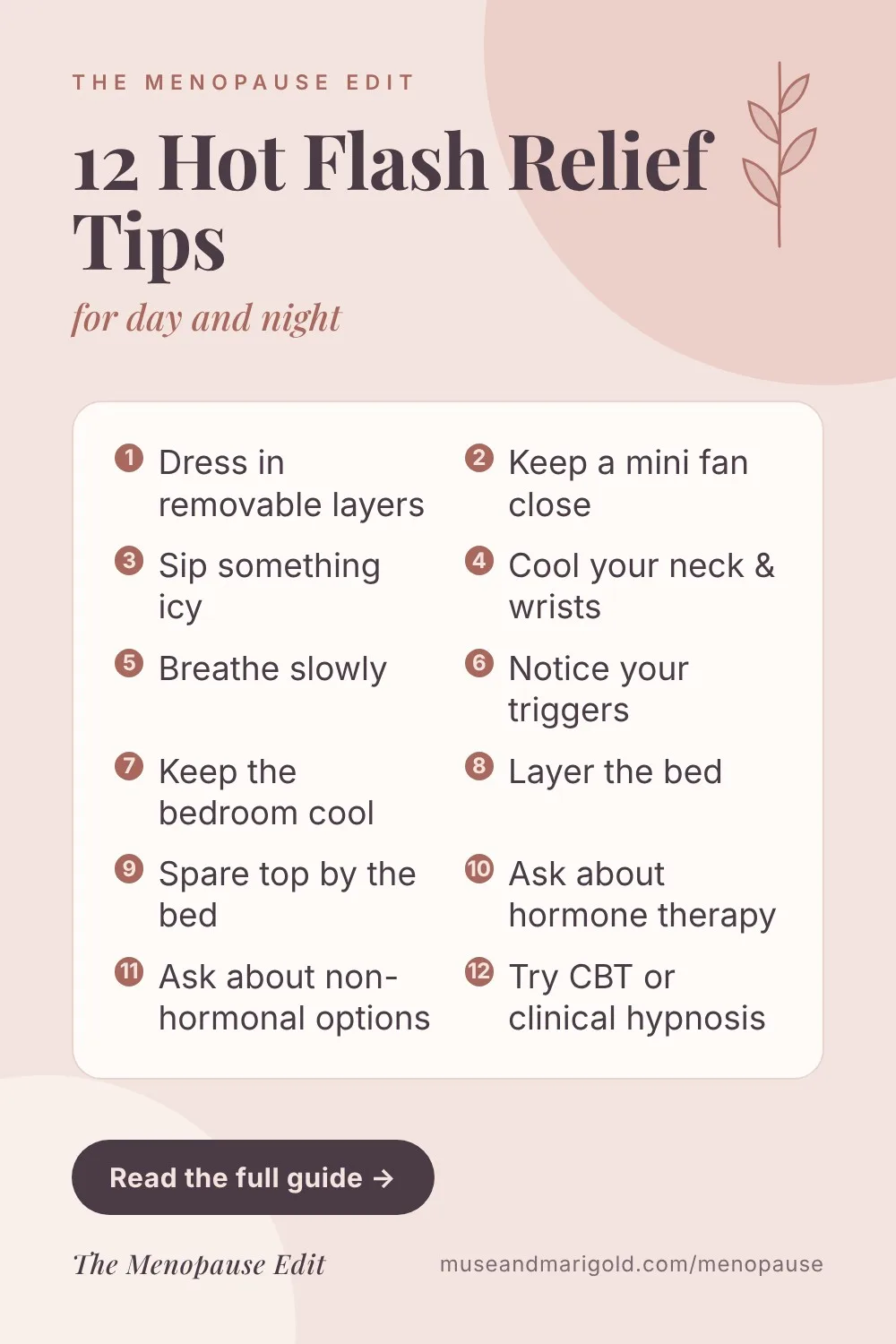
Hot Flashes Relief: 12 Cooling Tips and Treatments That Help
Comfort tricks help you get through a hot flash. Proven treatments help you have fewer of them. Here is an honest guide to both, plus how to talk to your doctor.
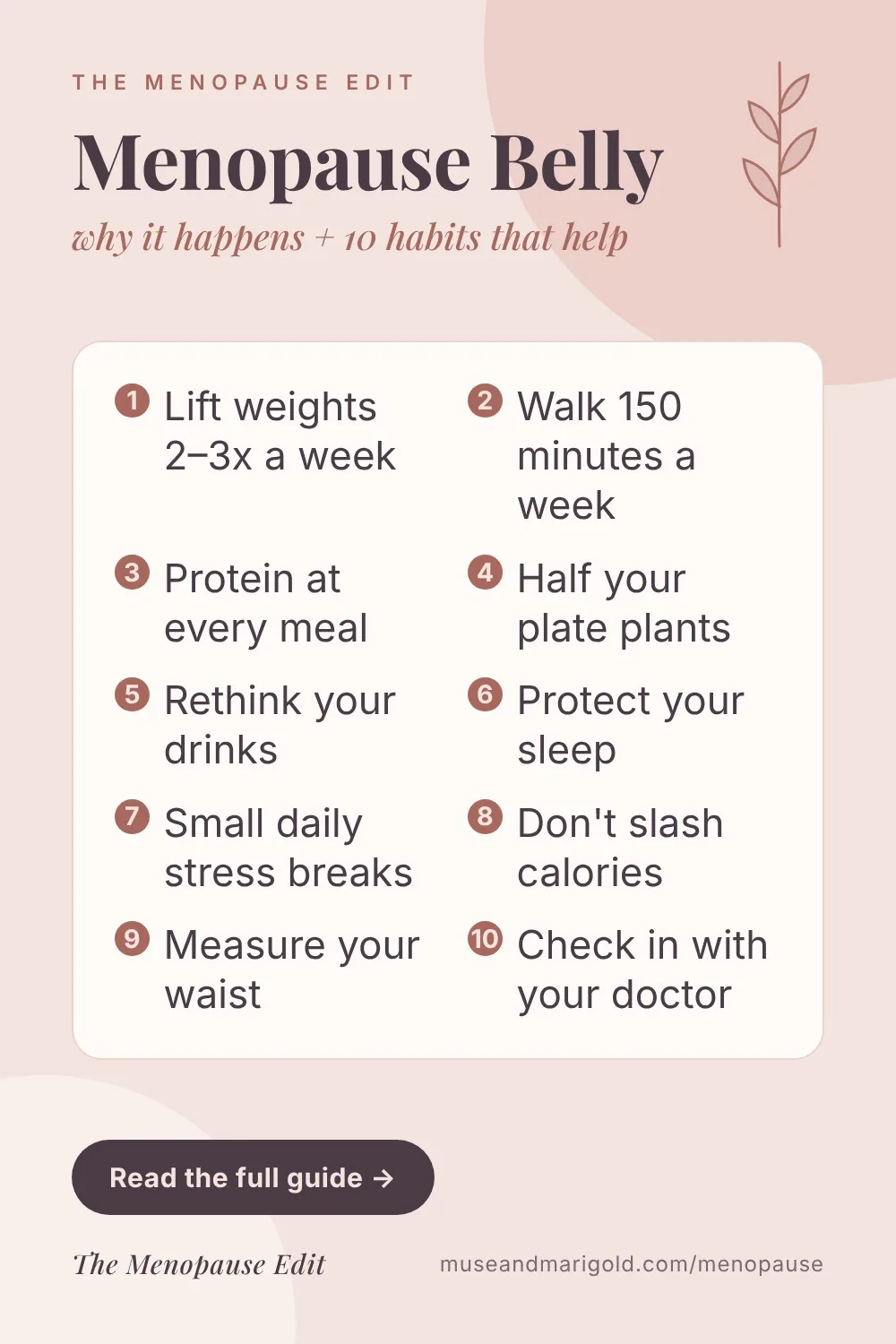
Menopause Belly: Why It Happens and 10 Habits That Actually Help
Your weight barely moves but your middle has changed. Here is why the menopause belly happens and ten everyday habits that actually help.