
Sleep & energy · 4 min read · October 20, 2026
Menopause Sleep Routine: A Calm Evening Plan for Night Sweats and 3 a.m. Wake-Ups
Awake at 3 a.m., too hot then too cold? Here is a calm, step-by-step evening routine for perimenopause and menopause sleep, and when to talk to your doctor.
You fall asleep fine. Then at 3 a.m. you are wide awake, too hot, then too cold, mind racing through tomorrow's to-do list. If that sounds familiar, you are in good company. Sleep problems are among the most common complaints in perimenopause and menopause, and they make everything else harder: mood, focus, appetite and patience.
A calm, consistent evening routine won't fix every cause of poor sleep, but it gives your body the best possible conditions to rest. Here is a simple plan you can start tonight.
Why sleep changes in midlife
- Night sweats wake you up, sometimes without you remembering why.
- Shifting hormones affect the parts of the brain that regulate sleep and body temperature.
- Anxiety and a busy mind are more common during the transition.
- Needing the bathroom at night becomes more frequent with age.
- Sleep apnea becomes more common after menopause, and it often looks different in women: fatigue, morning headaches and waking unrefreshed rather than loud snoring.
The evening routine
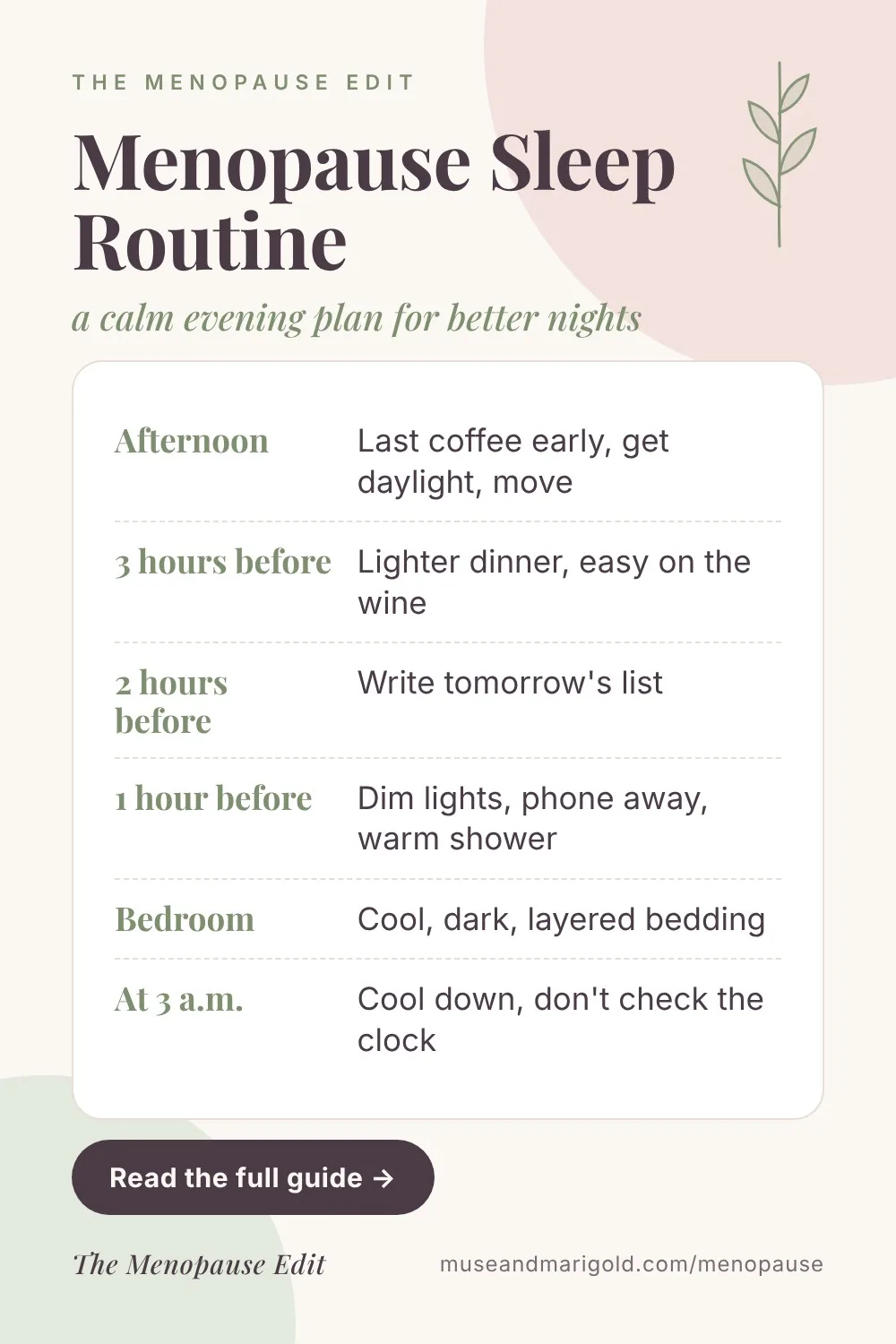
Afternoon: set up the night
- Make your last coffee before noon or early afternoon. Caffeine stays in your system for hours.
- Get outside in daylight. Morning or early afternoon light helps set your body clock.
- Move your body. Regular exercise supports deeper sleep, though very hard workouts right before bed can keep some women wired.
Two to three hours before bed
- Eat a lighter dinner and finish it a few hours before you lie down.
- Go easy on alcohol. A glass of wine may help you fall asleep, but alcohol tends to fragment sleep in the second half of the night and can trigger hot flashes for some women.
- Write tomorrow's list. Getting your to-dos onto paper makes it easier to stop rehearsing them at 3 a.m.
One hour before bed
- Dim the lights and put your phone on charge outside the bedroom if you can.
- Take a warm, not hot, shower. The drop in body temperature afterwards can help you feel sleepy.
- Choose a calming wind-down: a paper book, gentle stretching, a cup of chamomile or another caffeine-free tea, or a short breathing exercise.
The bedroom
- Keep it cool. Many sleep experts suggest somewhere in the low to mid 60s Fahrenheit.
- Layer the bed with a sheet and light blankets instead of a single heavy duvet.
- Use breathable bedding and sleepwear, such as cotton, linen or bamboo-based fabrics.
- Keep a glass of cold water and a spare top on the nightstand for night sweats.
- Make it dark and quiet with blackout curtains, an eye mask or a fan for white noise.
What to do at 3 a.m.
Lying in bed willing yourself back to sleep usually backfires. Try this instead:
- Cool down first: throw off a layer, flip the pillow, sip cold water.
- Don't check the time. Clock-watching adds pressure.
- Breathe slowly, with a longer out-breath than in-breath, for a few minutes.
- If you are still awake after what feels like 20 minutes, get up, go somewhere dim and do something quiet and boring until you feel sleepy, then go back to bed.
This last step is part of cognitive behavioral therapy for insomnia, known as CBT-I, which is recommended as a first-line treatment for long-term insomnia. It's available through therapists, sleep clinics and structured online programs.
Keep the same wake-up time
After a bad night it's tempting to sleep in or nap for hours. A consistent wake-up time, even on weekends, does more for your sleep over the following weeks than catching up. If you need a nap, keep it short and early in the afternoon.
When to talk to your doctor
- Poor sleep most nights for more than a few weeks
- Night sweats that wake you several times a night
- Loud snoring, gasping or choking at night, morning headaches or heavy daytime sleepiness, which can be signs of sleep apnea
- Restless, uncomfortable legs in the evening
- Low mood or anxiety that's affecting your days
Treating night sweats directly, with hormone therapy or non-hormonal options, often improves sleep too. So does treating sleep apnea or insomnia. You don't have to accept exhaustion as part of this stage of life.
This article is for general information and is not medical advice. Please talk with your doctor about ongoing sleep problems.

Pin this
Menopause Sleep Routine: A Calm Evening Plan for Night Sweats and 3 a.m. Wake-Ups | The Menopause Edit
Sleep worse since perimenopause? Try this step-by-step evening routine: when to stop caffeine, what to do two hours and one hour before bed, how to set up a cool bedroom for night sweats, and when poor sleep is worth a doctor visit.
bedtime routine menopause insomnia menopause sleep night sweats perimenopause sleep sleep tips for women over 40
← What to Wear With Hot Flashes: A Fall and Winter Layering Guide · Perimenopause Symptom Tracker: What to Track and How to Talk to Your Doctor →