
Everyday rituals · 4 min read · October 20, 2026
Perimenopause Symptom Tracker: What to Track and How to Talk to Your Doctor
A few weeks of simple tracking turns 'something has changed' into a clear picture your doctor can act on. Here's what to track and how to use it.
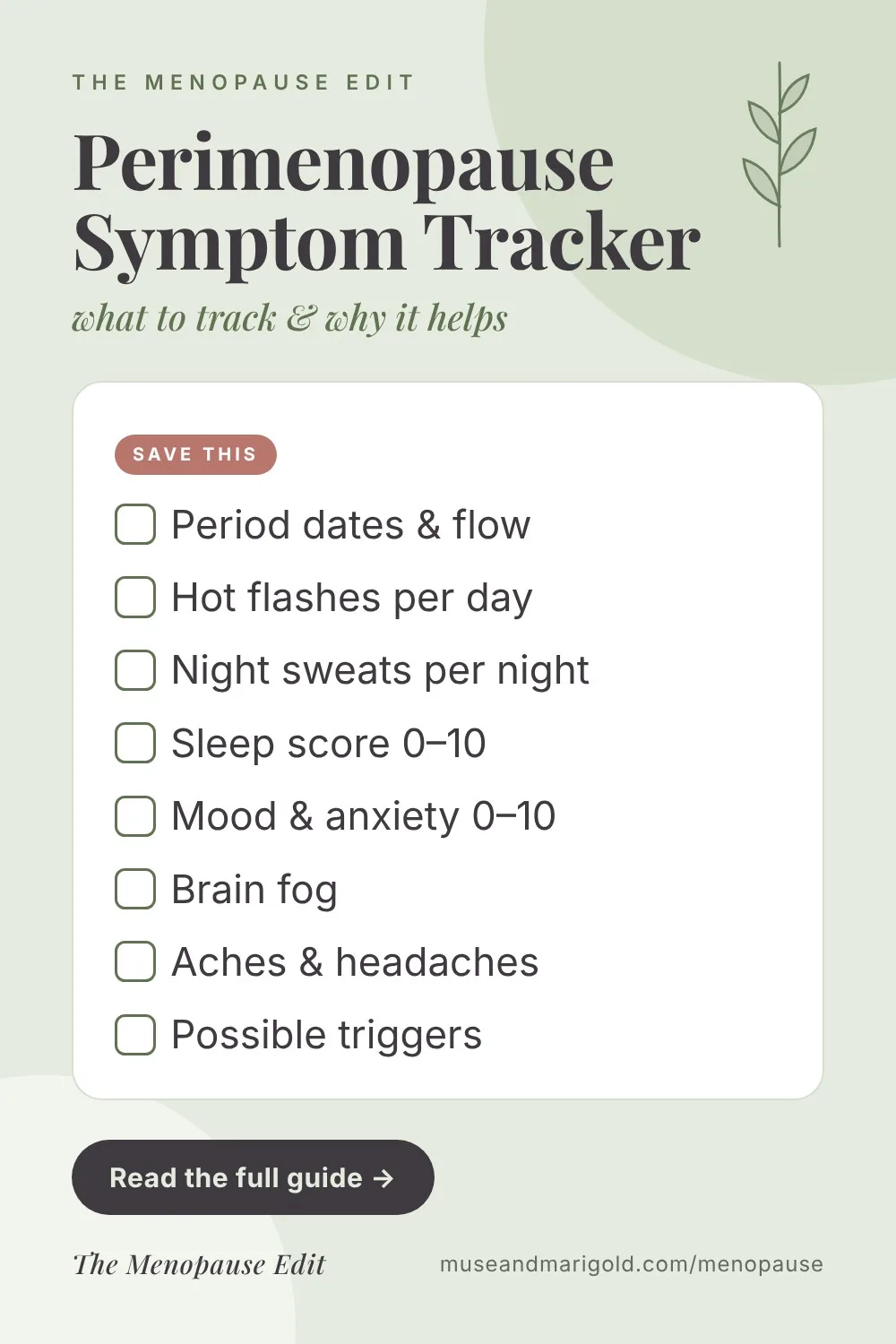
Many women walk into an appointment knowing something has changed, then struggle to explain it in ten minutes. "I'm just not sleeping, and I feel hot, and my periods are weird" is true, but it's hard for a doctor to act on. A few weeks of simple tracking turns that into a clear picture: how often, how strong, and how much it's affecting your life.
Here's what to track during perimenopause, how to do it without it becoming a chore, and how to use your notes to get more out of your next appointment.
Why tracking helps
- Perimenopause symptoms come and go. A good week at your appointment can hide a terrible month.
- Patterns become visible. You may notice that night sweats cluster before your period, or that bad sleep always follows wine.
- It speeds up decisions. Many clinicians diagnose perimenopause in women over 45 from symptoms and cycle history, and your records give them exactly that.
- You'll see whether treatment is working. Comparing before and after is much easier with notes.
What to track
Your cycle
- First day of each period and how many days it lasts
- Flow: light, medium, heavy, or very heavy with clots
- Any spotting between periods or after sex
Hot flashes and night sweats
- How many per day and per night
- Strength, on a scale of 1 to 10
- Whether they woke you up
Sleep
- Roughly what time you fell asleep and woke up
- How many times you woke in the night
- How rested you felt, from 1 to 10
Mood and mind
- Anxiety, irritability or low mood, from 1 to 10
- Brain fog or trouble concentrating
Body
- Joint or muscle aches
- Headaches or migraines
- Palpitations
- Bladder changes, vaginal dryness, changes in libido
- Breast tenderness or bloating
Possible triggers
- Alcohol, caffeine, spicy food
- Stressful days
- Exercise
How to keep it simple
Tracking only works if you keep doing it. A few ideas:
- Two minutes, once a day. Fill it in at the same time each evening, maybe with your tea.
- Use scores, not essays. A 1 to 10 rating is faster than writing and easier to compare.
- Track for at least two to three months so you can see patterns across several cycles.
- Choose paper or app, not both. A printed sheet on the fridge works as well as an app, and some women find paper easier to stick with.
If you'd like a ready-made version, our free printable perimenopause symptom tracker has a monthly log and a one-page appointment prep sheet.
Using your notes at the appointment
Don't hand over three months of pages and hope for the best. Summarize them on one page first:
- Your top three symptoms and how they affect your daily life, such as missing work, snapping at your kids, or being too tired to exercise.
- The numbers: for example, "8 to 10 hot flashes a day, waking 3 times a night, periods every 21 days and heavy for 2 days."
- What you have already tried and whether it helped.
- Your health history: current medicines and supplements, and family history of breast cancer, blood clots, heart disease, stroke or osteoporosis.
- Your questions. Write them down so they don't get lost.
Questions worth asking
- Do my symptoms sound like perimenopause, or should we check for anything else, like thyroid or iron levels?
- Am I a good candidate for hormone therapy? What are the benefits and risks for someone with my history?
- What non-hormonal options would suit me?
- What can I do now for my bones and heart health?
- When should I come back, and what should I keep tracking?
If you feel brushed off, it's reasonable to ask for a referral or to look for a clinician with specific menopause training. The Menopause Society offers a directory of certified practitioners.
Signs to report right away
- Very heavy bleeding, soaking a pad or tampon every hour
- Bleeding after sex, between periods, or after 12 months without a period
- Chest pain or palpitations with dizziness or breathlessness
- Low mood lasting more than two weeks, or thoughts of harming yourself
Start tonight
You don't need a perfect system. Write today's date, your period status, how many hot flashes you had and how you slept. That's day one. In a few weeks you'll have a picture of this stage of life that no one can wave away.
This article is for general information and is not medical advice. Please talk with your doctor or a menopause-trained clinician about your own symptoms and options.

Pin this
Perimenopause Symptom Tracker: What to Track and How to Talk to Your Doctor | The Menopause Edit
Track your cycle, hot flashes, sleep, mood and body changes for two to three months and see the pattern clearly. Here is exactly what to track in perimenopause, how to keep it to two minutes a day, and a free printable tracker.
doctor appointment menopause printable menopause symptom checklist perimenopause perimenopause journal perimenopause symptom tracker
← Menopause Sleep Routine: A Calm Evening Plan for Night Sweats and 3 a.m. Wake-Ups · Menopause Belly: Why It Happens and 10 Habits That Actually Help →