
Food & mood · 4 min read · October 20, 2026
Menopause Grocery List: 30 Foods to Keep in Your Kitchen After 40
No single food fixes menopause, but your needs do shift. Use this 30-item grocery list for protein, bones, fiber and heart health, plus a simple day of eating.
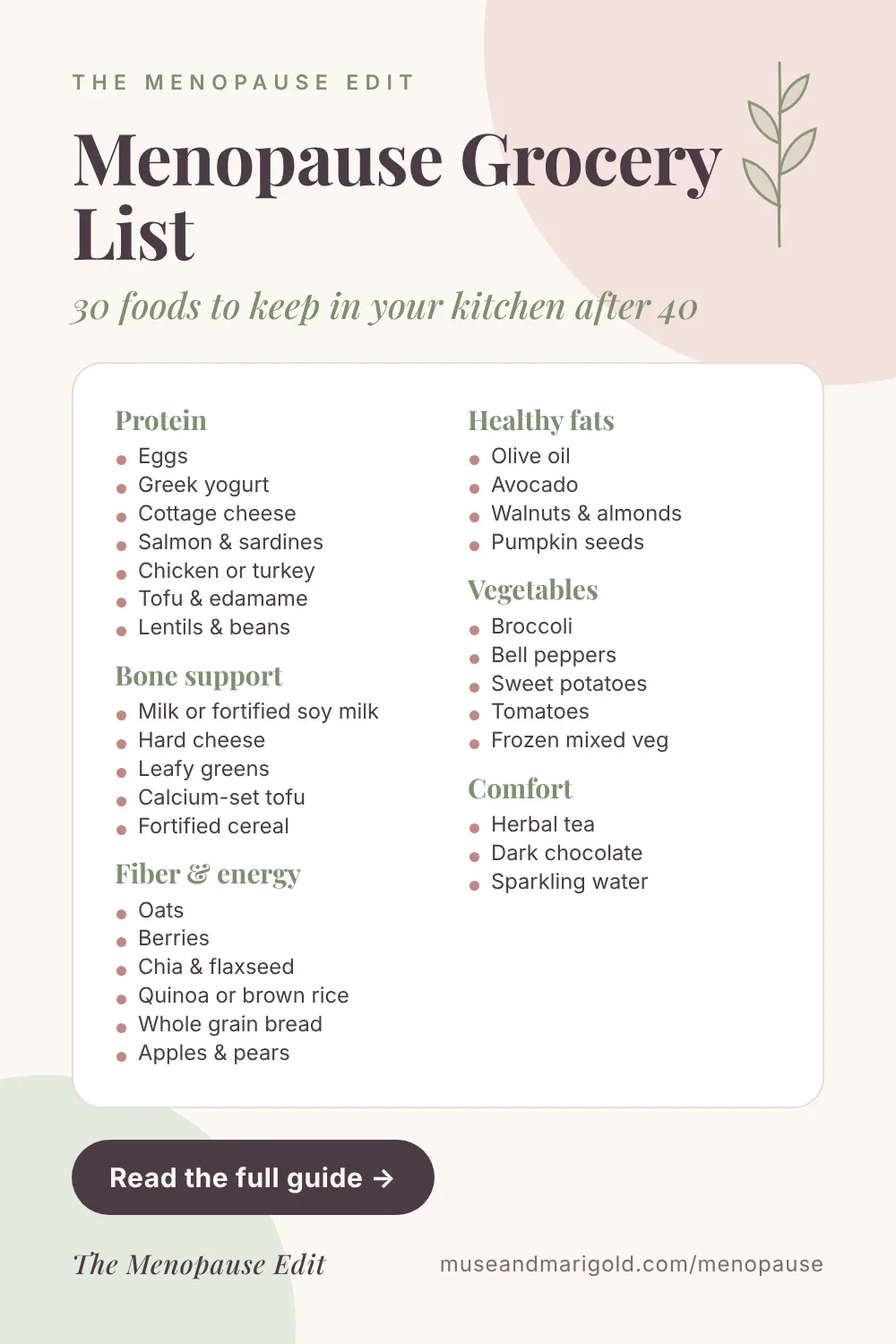
No single food fixes menopause, and you don't need a special diet to get through it. But your body's needs do shift in your 40s and 50s. You are losing muscle more easily, your bones need more support, your heart risk starts to climb after menopause, and steady energy matters more than ever when sleep is patchy.
A well-stocked kitchen makes good choices the easy choice. Use this menopause grocery list as a template for your weekly shop, and swap in the foods you actually enjoy.
What your body needs more of in midlife
- Protein to protect muscle. Many experts suggest spreading it across the day, roughly 25 to 30 grams per meal, rather than loading it all at dinner.
- Calcium and vitamin D for bones. Women 51 and older are advised to get 1,200 mg of calcium a day, according to the NIH Office of Dietary Supplements, ideally mostly from food.
- Fiber for digestion, blood sugar and heart health. Most women fall well short of the roughly 21 to 25 grams a day that is recommended.
- Healthy fats, especially from fish, olive oil, nuts and seeds, for heart health.
- Colorful plants for the vitamins, minerals and antioxidants that come with them.
The menopause grocery list
Protein
- Eggs, the easiest protein breakfast there is.
- Greek yogurt or skyr, high in protein and a good source of calcium.
- Cottage cheese, for snacks, toast toppings and smoothies.
- Salmon, sardines or trout, which add omega-3 fats. Canned sardines and salmon with bones also add calcium.
- Chicken or turkey, for simple batch-cooked lunches.
- Tofu, tempeh or edamame, plant protein that also contains soy isoflavones. Research on soy and hot flashes is mixed, but soy foods fit well into a healthy diet.
- Lentils, chickpeas and black beans, protein and fiber in one can.
Bone support
- Milk or calcium-fortified soy milk
- Hard cheeses like parmesan or cheddar, in modest amounts
- Leafy greens such as kale, collards and bok choy
- Calcium-set tofu, check the label for calcium sulfate
- Fortified cereal or orange juice, if you like them
Fiber and steady energy
- Oats, for overnight oats or a warm bowl on cold mornings
- Berries, fresh or frozen
- Chia seeds and ground flaxseed, easy to stir into yogurt or oats
- Quinoa, brown rice or farro
- Whole grain or seeded bread
- Apples and pears, easy portable snacks
Heart-friendly fats
- Extra virgin olive oil
- Avocados
- Walnuts and almonds
- Pumpkin seeds
Colorful vegetables
- Broccoli and cauliflower
- Bell peppers
- Sweet potatoes
- Tomatoes, fresh or canned
- A bag of frozen mixed vegetables, for nights when you can't face chopping
Flavor and comfort
- Herbal teas such as peppermint or chamomile, to replace a late afternoon coffee
- Dark chocolate, a square or two
- Sparkling water, a refreshing swap if you are cutting back on alcohol
Foods to go easy on
You don't need to cut anything out completely, but a few things tend to make midlife symptoms harder for many women:
- Alcohol, which can disturb sleep and, for some women, set off hot flashes.
- Caffeine late in the day, which can make 3 a.m. wake-ups worse.
- Very spicy food, if you notice it brings on a flush.
- Ultra-processed snacks and sugary drinks, which are easy to overeat and don't keep you full.
- Too much salt, as blood pressure tends to rise with age.
A simple day of eating
- Breakfast: Greek yogurt with berries, walnuts and a spoon of ground flaxseed
- Lunch: Big salad with chickpeas, leafy greens, olive oil dressing and a boiled egg or two
- Snack: An apple with a small handful of almonds, or cottage cheese
- Dinner: Salmon, roasted sweet potato and broccoli
- Evening: Peppermint tea and a square of dark chocolate
A note on supplements
It's tempting to buy a menopause supplement blend, but most haven't been shown to help with hot flashes or weight. Food first is the safer starting point. If you think you may be low in calcium, vitamin D, iron or B12, ask your doctor about a blood test before adding supplements.
Make it easy on yourself
Print or screenshot this list, keep it on your phone, and choose five or six items to start with this week. Small, repeatable changes are what stick.
This article is for general information and is not medical or nutrition advice. If you have a health condition or take medication, please check with your doctor or a registered dietitian before changing your diet.

Pin this
Menopause Grocery List: 30 Foods to Keep in Your Kitchen After 40 | The Menopause Edit
Your printable-style menopause grocery list: protein to protect muscle, calcium-rich foods for bones, fiber for steady energy and heart-friendly fats. Includes foods to go easy on in perimenopause and a simple day of eating. Save it for your next grocery run.
foods for menopause healthy eating over 40 menopause diet menopause grocery list menopause nutrition perimenopause diet
← Hot Flashes Relief: 12 Cooling Tips and Treatments That Help · What to Wear With Hot Flashes: A Fall and Winter Layering Guide →